
 Автор Богдан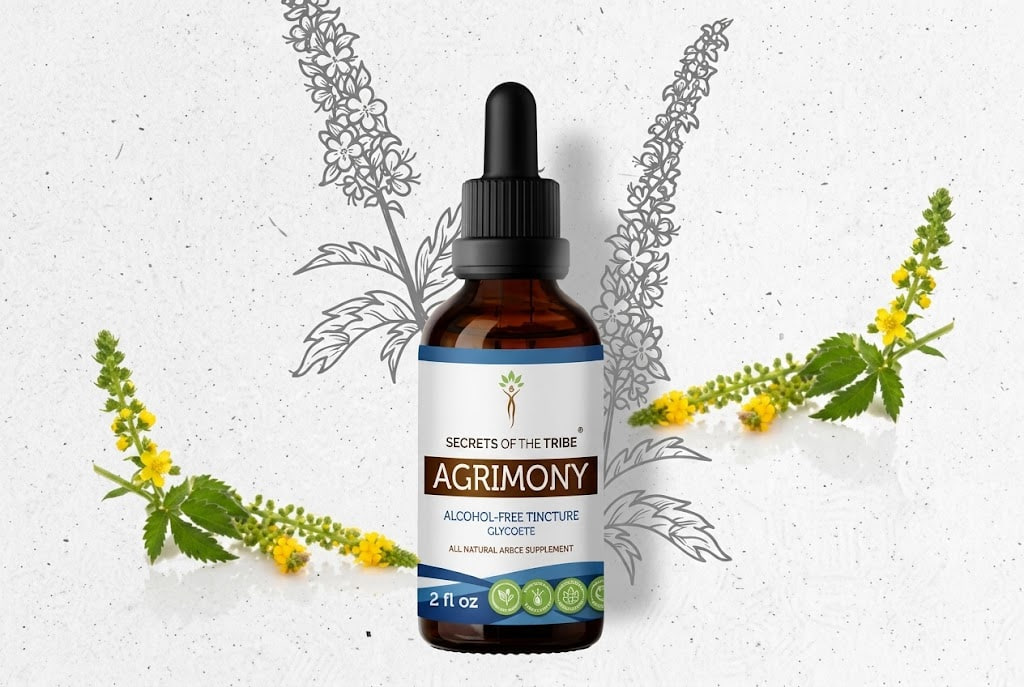
Agrimony vs calendula compares two flowering herbs that differ in taxonomy, harvested material, composition, and product format. Agrimony usually refers to the flowering tops of Agrimonia eupatoria. Calendula products generally use the flowers of Calendula officinalis.
The important question is not which plant is better. It is whether two products identify the same type of material, preparation, and intended route. A tea, tincture, cosmetic oil, and topical cream cannot be compared as though the format has no effect on how the product is made or labeled.
Are Agrimony and Calendula the Same Kind of Plant?
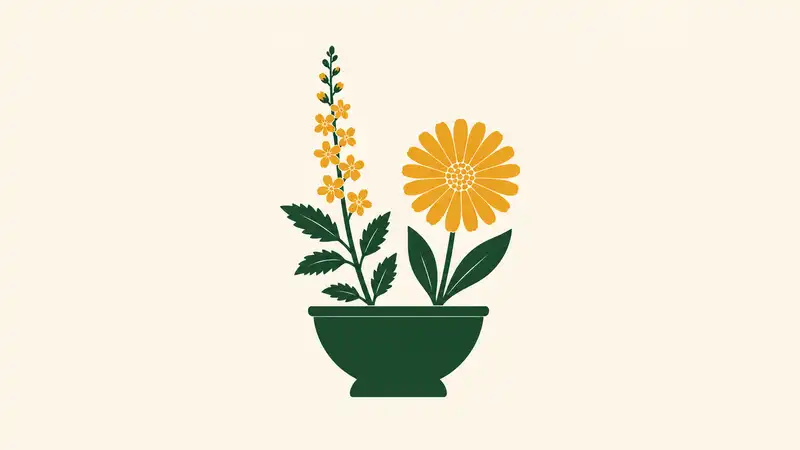
No. Both are flowering plants, but they belong to different botanical families and have different growth forms.
Agrimonia eupatoria belongs to the Rosaceae family. It is a herbaceous plant with a tall spike of small yellow flowers and toothed leaves. Official European herbal documents identify its flowering tops as the relevant botanical material.
Calendula officinalis belongs to the Asteraceae family. It produces large yellow or orange flower heads. The species is commonly called calendula or pot marigold. It should not be confused with plants in the genus Tagetes, which are also sold under the common name marigold.
The shared yellow color is not evidence of botanical equivalence. Scientific names provide a more reliable identity than flower color, package artwork, or a common name.
What Are the Main Agrimony vs Calendula Differences?
The central differences involve species, family, harvested part, flavor, characteristic constituents, and common preparation types.
| Comparison point | Agrimony | Calendula |
|---|---|---|
| Accepted species | Agrimonia eupatoria | Calendula officinalis |
| Botanical family | Rosaceae | Asteraceae |
| Common herbal material | Dried flowering tops | Dried flowers or specified flower material |
| Visible structure | Small flowers, leaves, and upper stems | Flower heads, florets, or separated petals |
| Typical sensory profile | Herbal, mildly bitter, and astringent | Mildly aromatic, earthy, and slightly bitter |
| Notable constituent groups | Tannins, flavonoids, and other polyphenols | Flavonoids, triterpenes, carotenoids, and volatile compounds |
| Common product forms | Tea, tincture, liquid extract, and other labeled liquids | Tea ingredients, tinctures, infused oils, creams, ointments, and other topical products |
| Critical label question | Which flowering material and extraction carrier were used? | Does the product contain whole flowers, flower heads, petals, or an extract? |
These profiles describe raw materials and formats. They do not support an automatic comparison of expected outcomes.
Which Plant Parts Are Used in Agrimony and Calendula Products?
Agrimony preparations typically use flowering tops. Calendula preparations use flower material, but the exact definition can vary between specifications and retail products.
Agrimony flowering tops
Flowering tops are not flowers alone. The material may include blossoms, buds, leaves, and sections of the upper stem collected while the plant is flowering. Labels may also use terms such as herb or flowering aerial parts.
Calendula flower material
A calendula flower head contains many individual florets. The long outer structures commonly called petals are ray florets. The center contains disc florets. A product made from separated petals is therefore not identical to one made from the complete flower material.
Plant-part disclosure matters because different materials can have different color, aroma, constituent profiles, and manufacturing specifications. A photograph of orange petals does not establish what entered the finished product.
How Do Agrimony and Calendula Teas Compare?
Both herbs can appear in tea products, but botanical identity and consumption labeling must be confirmed before preparation. A topical calendula infusion is not automatically suitable as a beverage.
Agrimony tea usually uses dried, cut flowering tops. It tends to produce a light brown or golden infusion with a dry, mildly bitter taste. Longer steeping or finer particles may increase astringency.
Calendula tea products may contain whole flower material, broken florets, or separated orange and yellow ray florets. The infusion is usually less astringent than agrimony and may have a mild earthy or aromatic note. Appearance and intensity vary with the selected flower material.
Follow the directions on the specific package. Do not transfer brewing quantities from an agrimony product to calendula or from a decorative botanical product to a food-labeled tea.
How Do Agrimony and Calendula Tinctures Differ?
A tincture comparison starts with the botanical name, plant part, extraction solvent, extraction ratio, and labeled route. The word “tincture” does not make two herbs chemically equivalent.
Agrimony tinctures generally extract flowering material into a declared liquid carrier. This tincture-format Agrimony product can serve as a retail example when evaluating bottle size, ingredient disclosure, serving information, and storage instructions. The physical label remains the best source for current product details.
Calendula tinctures require the same checks, but route information deserves extra attention. Some calendula liquids are sold as ingredients for topical formulations. Others may carry different directions under local product rules. Never infer oral suitability from the presence of a dropper.
An extraction ratio describes manufacturing input in a particular context. It does not allow a direct strength comparison across different species, plant parts, solvents, or calculation systems.
Why Must Oral and Topical Calendula Products Stay Separate?
Oral and topical labels describe different product categories. A product made for external application may contain carriers, preservatives, fragrances, or concentrations that were not designed for consumption.
Calendula commonly appears in creams, ointments, balms, infused oils, washes, and other external preparations. Agrimony can also appear in preparations with non-oral directions. The herb’s name does not override the route printed on the package.
Check for clear wording such as oral, external use only, topical, cosmetic, tea, or dietary supplement. If the route is missing or ambiguous, do not guess based on traditional-use descriptions, online comments, or packaging style.
Evidence is also route-specific. Findings from a topical preparation do not establish what an oral preparation does, and oral research cannot be transferred automatically to a cream or oil.
Can Research on Agrimony Be Applied to Calendula?
No. Research on one herb cannot be used as direct evidence for the other. The species, family, plant part, preparation, route, and tested amount all differ.
Even studies involving the same species may not match a retail product. A laboratory extract made with one solvent may have a different profile from tea, tincture, infused oil, or powdered flowers.
Traditional use should also remain separate from clinical evidence. Historical documentation can show how a botanical was prepared or classified. It does not confirm the performance of every modern product carrying the same common name.
How Should You Compare Agrimony and Calendula Labels?
Begin with the back or side panel rather than the product name on the front. Record the botanical identity, plant part, format, route, and complete ingredient list.
For agrimony, confirm Agrimonia eupatoria and determine whether the material is flowering tops, aerial parts, or another declared part. For calendula, confirm Calendula officinalis and check whether the product uses whole flowers, flower heads, petals, or an extract.
Then review carriers and supporting ingredients. Water, ethanol, glycerin, vegetable oil, waxes, emulsifiers, flavors, and capsule materials create different finished products. Products with different carriers should not be compared only by bottle volume.
Flowering-Herb Product Checklist
Use this checklist before comparing an agrimony preparation with a calendula product. It separates plant identity from format and route. That distinction reduces common label-reading errors.
Confirm the species
Find the complete Latin name. Verify Agrimonia eupatoria or Calendula officinalis rather than relying on a common name.
Identify the plant part
Look for flowering tops, flowers, flower heads, petals, or another precise term. Do not infer the material from package photography.
Classify the format
Determine whether the product is tea, tincture, liquid extract, infused oil, cream, ointment, powder, or capsule.
Verify the intended route
Check whether the directions specify oral or topical use. Never use container style as a substitute for route instructions.
Read every ingredient
Review carriers, preservatives, flavors, fragrances, and other botanicals. These ingredients may define the practical product category.
Compare ratios carefully
Use extraction ratios only when the calculation basis, starting material, and solvent are clear. Do not compare unlike ratios as simple potency scores.
Check warnings and storage
Follow the product-specific precautions and storage conditions. Pay attention to plant-family sensitivities and damaged packaging.
What Does Ashwagandha and Alcohol Teach About Format Labels?
Ashwagandha and Alcohol is unrelated to the agrimony vs calendula comparison, but it shows why context matters. Alcohol can mean an extraction solvent listed in a tincture or a separate alcoholic beverage. Those situations involve different quantities and decisions. Reading the complete carrier statement prevents the word “alcohol” from being interpreted without its product context.
FAQ
Are agrimony and calendula the same plant?
No. Agrimony is commonly Agrimonia eupatoria in the Rosaceae family. Calendula is Calendula officinalis in the Asteraceae family.
Which part of agrimony is commonly used?
Agrimony preparations commonly use dried flowering tops, including flowers, leaves, and upper stems.
Which part of calendula is commonly used?
Calendula preparations commonly use flower material. Labels may specify complete flowers, flower heads, florets, or petals.
Is calendula the same as marigold?
Calendula is often called pot marigold, but it is not the same as Tagetes species commonly sold as garden marigolds.
Can topical calendula liquid be used as tea?
No such assumption is safe. Use a calendula product orally only when its label explicitly identifies it for that route.
Is agrimony tincture equivalent to agrimony tea?
No. A tincture uses a manufactured solvent system, while tea is prepared by infusing botanical material in water.
Can agrimony and calendula extraction ratios be compared directly?
Only when the ratio basis, plant part, starting material, solvent, and finished format are equivalent and clearly documented.
Which herb is better?
Neither is universally better. They are different botanical materials, so the relevant comparison is identity, format, route, and label quality.
Glossary
Aerial parts
The portions of a plant that grow above the ground.
Botanical name
A scientific name that identifies a plant by genus and species.
Extraction ratio
A manufacturing expression relating botanical input to a specified amount of extract.
Flower head
A cluster of small florets arranged to look like one flower, as seen in calendula.
Flowering tops
Upper plant material collected during flowering, often including flowers, leaves, and stems.
Infused oil
An oil that has been held with botanical material to transfer oil-compatible constituents.
Oral route
A product route that involves swallowing or use inside the mouth as directed.
Tincture
A liquid botanical extract made with a declared solvent system.
Topical route
Application to an external body surface according to product directions.
Conclusion
Agrimony and calendula differ in species, family, plant part, composition, and common product formats. Confirm the intended route before comparing any tea, tincture, oil, or topical preparation.
Sources Used
- Accepted taxonomy and family for Agrimonia eupatoria, Plants of the World Online - powo.science.kew.org/taxon/316550-2
- Accepted taxonomy and family for Calendula officinalis, Plants of the World Online - powo.science.kew.org/taxon/187894-1
- Agrimony botanical material and preparation formats, Agrimoniae herba - ema.europa.eu/en/medicines/herbal/agrimoniae-herba
- Calendula identity, flower material, preparation categories, and safety information, Calendulae flos - ema.europa.eu/en/medicines/herbal/calendulae-flos
- Current assessment update for calendula flower, Addendum to Assessment Report - ema.europa.eu/en/documents/herbal-report/addendum-assessment-report-calendula-officinalis-l-flos-revision-1
- Retail example of an Agrimony tincture format, Agrimony Tincture product page - secrets.shop/products/agrimony-tincture